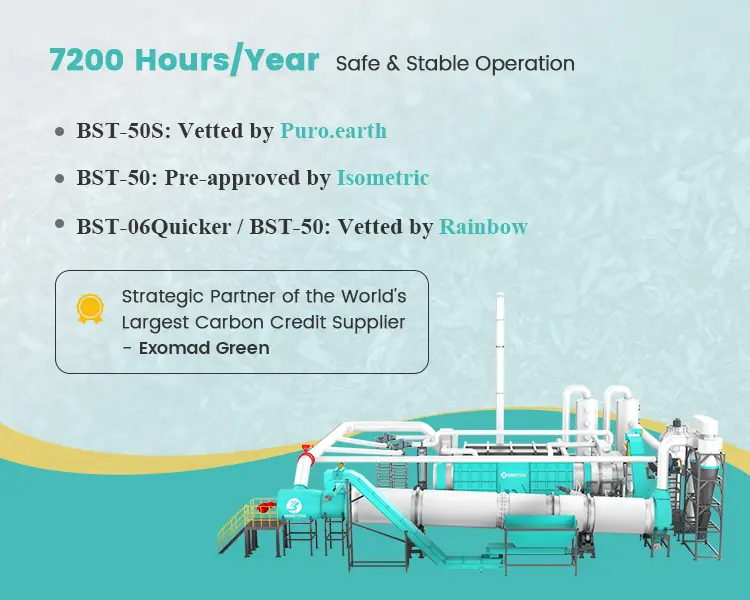
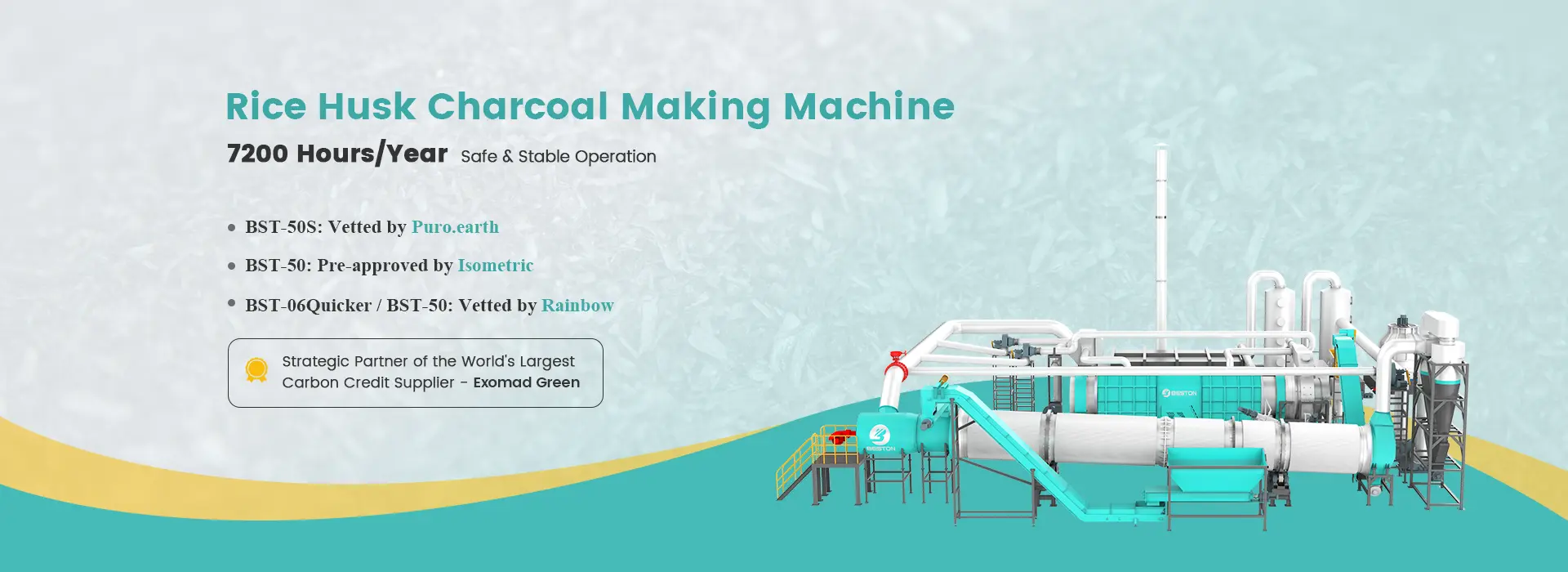
Rice husk charcoal making machine uses pyrolysis technology to convert rice husk into charcoal/biochar, transforming agricultural residues into valuable products. This process stabilizes the carbon in rice husk and increases its energy density, enabling it to serve as carbon sink and a fossil fuel substitute. In particular, rice husks are becoming a mainstream raw material that helps project developers obtain carbon credits in CDR projects. As a result, the machine does more than close the loop on agricultural waste, it turns rice husk into a bankable feedstock for carbon credit markets.
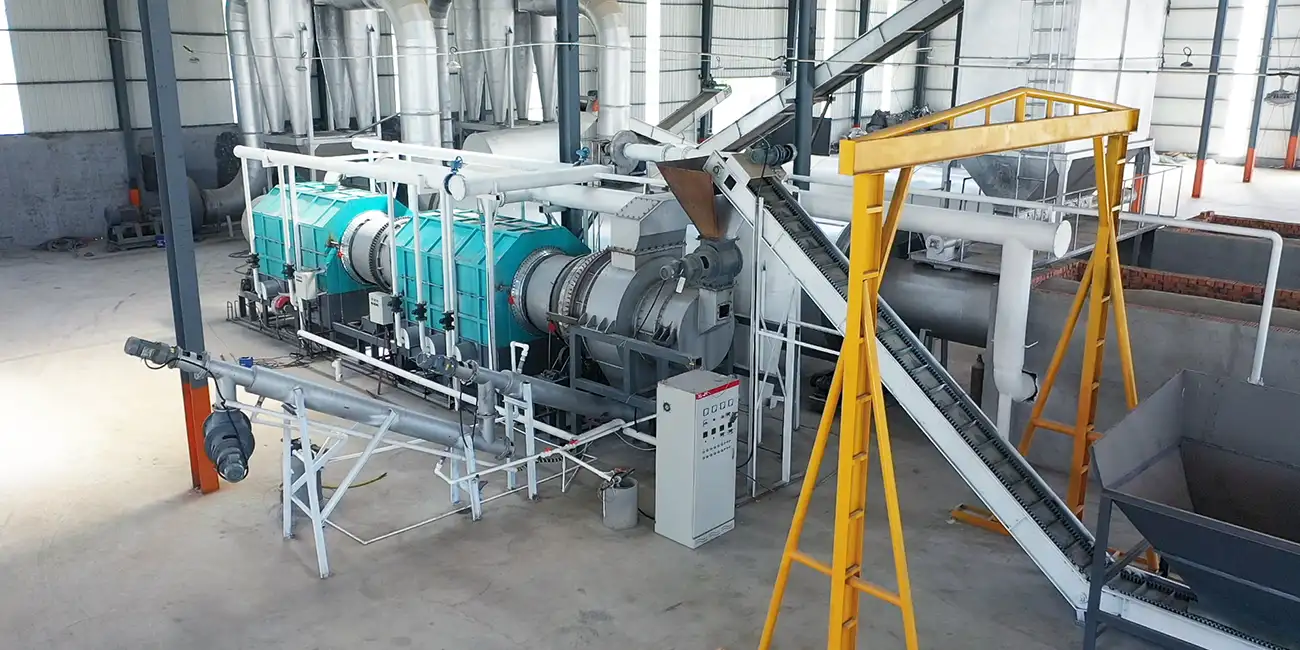
Rice Husk Charcoal Making Machine: High-Efficiency Recycling Choice
Rice husk charcoal machine is an industrial system that converts rice husk into high-value resources through pyrolysis. The core principle of pyrolysis is to heat the material at high temperatures in an oxygen-free environment, transforming organic matter into solid biochar. The entire production line runs continuously from feeding to discharge, with a high level of automation that supports 24-hour uninterrupted operation. The following is the workflow from rice husk to charcoal:
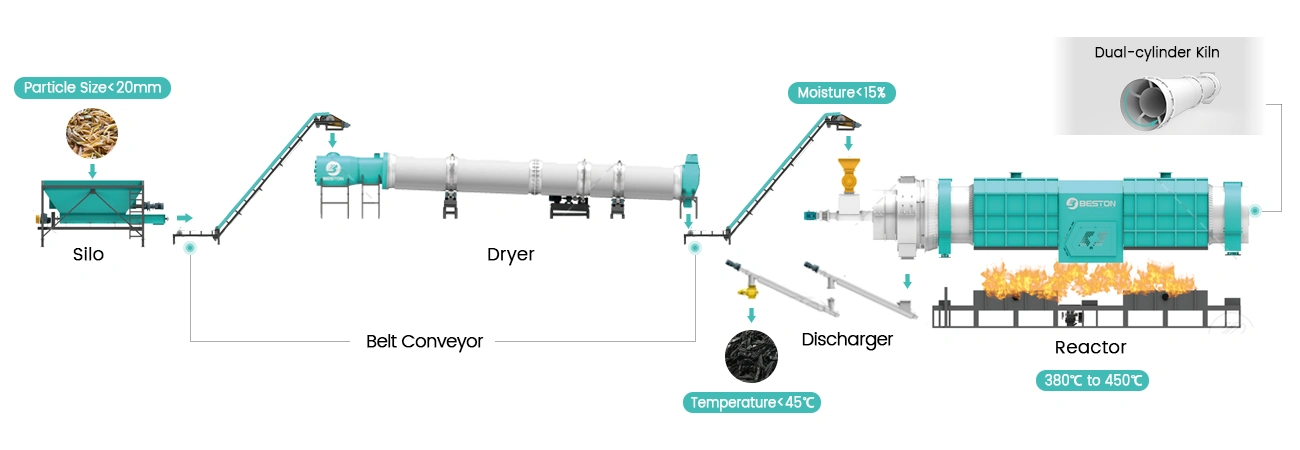
- Step 1: Feeding
Rice husk is fed from the silo into the production line via belt conveyor. Particle size must be kept below 20mm to ensure stable material flow throughout the system. - Step 2: Drying
Material enters dryer, where moisture content is reduced to below 15%. Excess moisture causes carbonization temperature fluctuations, directly affecting charcoal yield. - Step 3: Carbonization
Dried rice husk enters the reactor, where the operating temperature ranges from 380°C to 450°C. Both reaction temperature and material residence time are precisely controllable. - Step 4: Discharge
Biochar is discharged through a multi-stage water-cooled discharger at a temperature below 45°C, and can proceed directly to packaging or further processing.
3D Demonstration Video of the Working Process
Parameter & Model of Rice Hull Carbonizer for Sale
To meet the needs of different customers, Beston Group offers a comprehensive range of rice husk charcoal making machine for sale. Our product line ranges from small equipment to large systems suitable for large-scale operations. We also provide expert support in planning production facilities to ensure integration of the equipment. The following is a specific parameter table:
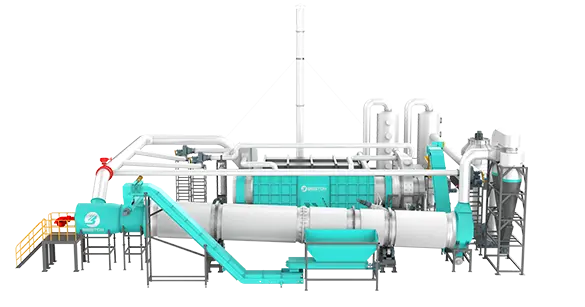
BST-50: Industrial-scale Model
- Vetted by Puro.earth, Rainbow, pre-approved by Isometric
- 6,000 tons biochar production annually
- 7200H/Y stable&safe operation
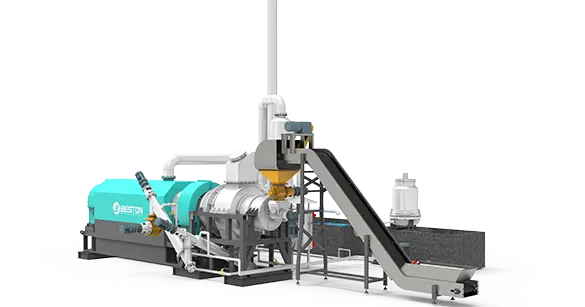
BST-06Quicker: Pilot-scale Model
- Vetted by Rainbow
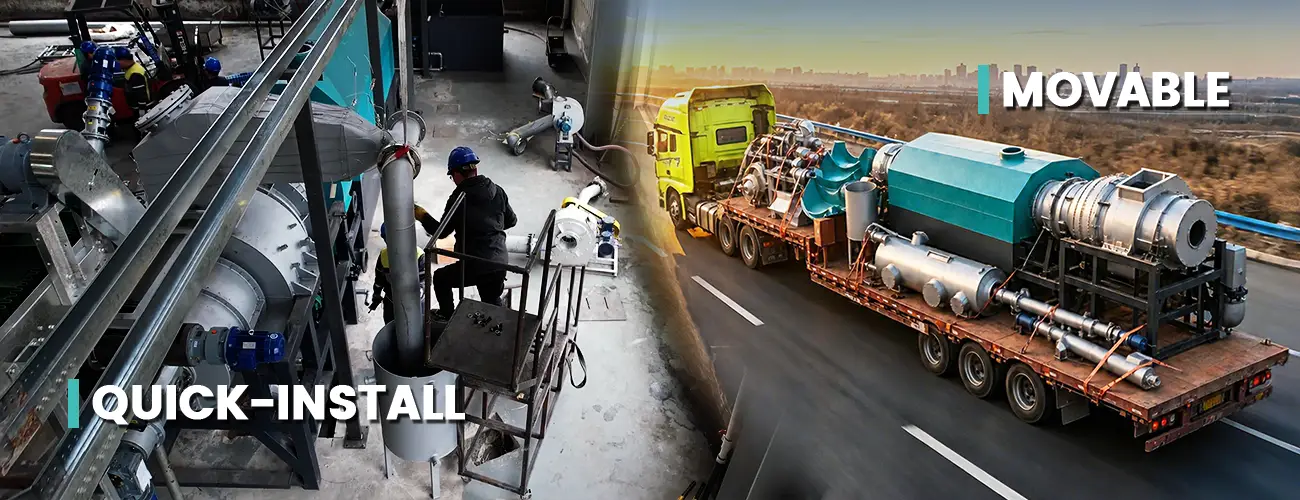
- 8-hour rapid installation and deployment
- Movable design allowing 8-hour disassembly and reassembly
| Model | BST-50 Standard | BST-50 Max | BST-50S | BST-06 Quicker |
|---|---|---|---|---|
| Operating Mode | Continuous | Continuous | Continuous | Continuous |
| Application | Commercial-scale | Commercial-scale | Commercial-scale | Pilot Testing |
| Certification Platform | Isometric, Rainbow | Isometric, Rainbow | Puro.earth, Isometric, Rainbow | Rainbow |
| Reactor Material | Staineless Steel 304 | Staineless Steel 304 | Staineless Steel 310s | Staineless Steel 304 |
| Feedstock Moisture | Below 15% | From 15% to 55% | From 15% to 55% | Below 15% |
| Feedstock Size | 5-20mm | 5-20mm | 5-20mm | 5-20mm |
| Feeding Capacity (only for pyrolysis) | 10-15m³/h | 10-15m³/h | 10-15m³/h | 100-200KG/H |
| Max. Pyrolysis Temperature (Combustion Chamber) | 650℃ | 650℃ | 700℃ | 650℃ |
| Residue Retention Time | 15-20 minutes | 15-20 minutes | 15-20 minutes | 15-20 minutes |
| Operating Pressure | -20 - 0 pa | -20 - 0 pa | -20 - 0 pa | -20 - 0 pa |
| Cooling Method | Water | Water | Industrial Refrigeration Units | Water |
| Exhasut Gas Treatment | Standard | Standard | High Performance | Standard |
| Biochar Temperature | 45℃ | 45℃ | 45℃ | 45℃ |
| Annual Operating Hours | >7200hrs | >7200hrs | >7200hrs | >7200hrs |
| Service Life | 5-8 years | 5-8 years | 8-10 years | 5-8 years |
| Land Space Required (L*W*H*m) | 35*15*8 | 65*15*8 | 65*15*8 | 35*15*8 |
| Power Consumption | 121kw/h | 270-288kw/h | 270-304kw/h | 25.1kw/h |
| Water Consumption | 5-7m³/day | 5-7m³/day | 0 | 3-5m³/day |
| Fuel Consumption | 220-260m³/h | 220-260m³/h | 220-260m³/h | 30-50m³/day |
| Installation Period | 60 days | 60 days | 60 days | 7 days |
Rice Husk Charcoal Making Machine: Vetted by Puro.earth & Isometric & Rainbow
In voluntary carbon market, biochar carbon removal is the most mature “durable carbon removal pathways.” Rice husks, due to low cost and stable supply, are increasingly becoming the preferred raw material for project developers. In project development, whether the equipment is endorsed by a mainstream certification platform has become a key factor in quickly acquiring carbon credits. BST series rice husk carbonizer has received endorsement from 3 certification platforms:
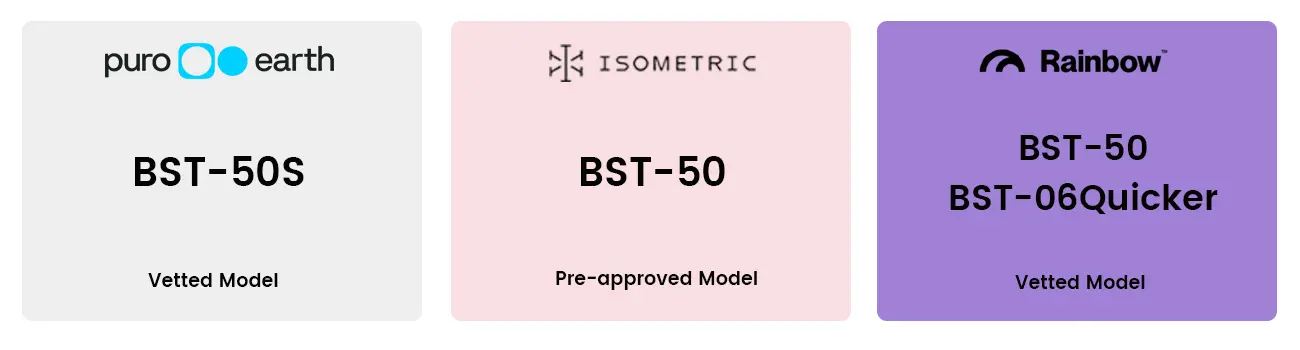
These endorsements create the following value for biochar carbon removal project developers:
Faster project validation
Equipment-level technical verification has been completed independently by the certification bodies, significantly reducing the overall timeline from project registration to carbon credit issuance.
Greater buyer confidence
Equipment independently evaluated by leading certification platforms carries stronger credibility with carbon credit buyers, accelerating transaction decisions and enhancing financing attractiveness.
Easier project expansion
Biochar equipment validation is completed once at the model level. When deploying at new sites, reactor re-validation is not required, compressing the timeline for distributed, multi-site scaling.
BST-50 Rice Husk Charcoal Machine: Engineered to Solve Production Challenges
In rice husk charcoal production, frequent downtime and insufficient output are the two leading causes of runaway operating costs. The BST-50S rice husk charcoal making machine addresses both through two core engineering designs.
Downtime: Tar and Carbon Dust Accumulation
Rice husk pyrolysis system generates tar and wood vinegar vapors. When condense and accumulate inside pipelines, they can cause blockages, leading to unplanned work stoppages.
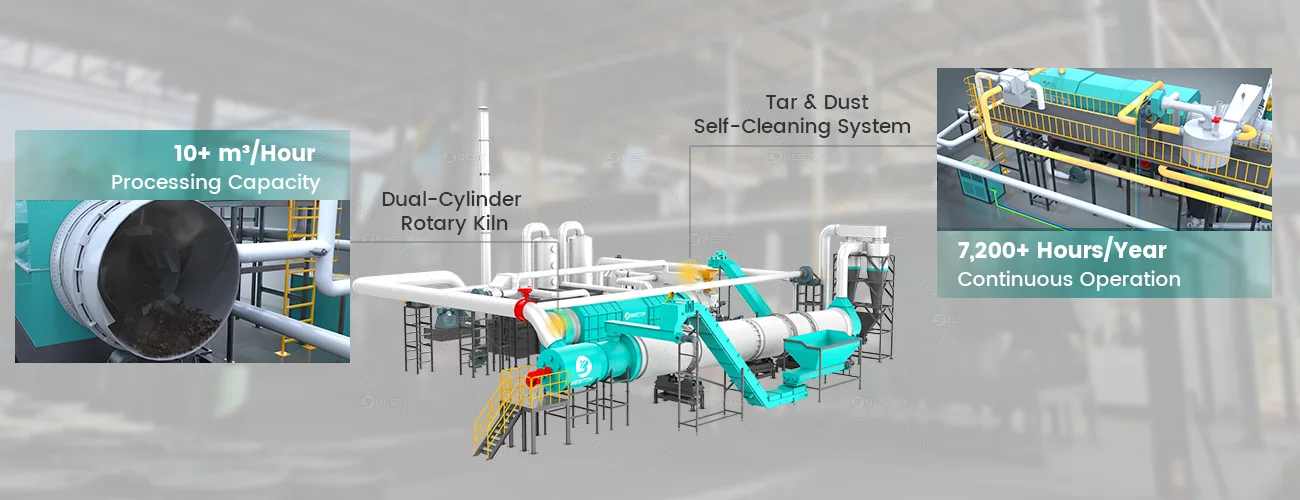
Solution: Tar and Dust Self-Cleaning System
- Prevents tar and wood vinegar condensation: Pipeline insulation prevents condensation. Gaseous tar and wood vinegar are directly introduced into the combustion system.
- Prevents carbon dust accumulation: The automatic purging device will cycle and start at timed points where dust easily accumulates, continuously removing residual carbon dust.
Together, these two mechanisms enable over 7,200 hours of stable annual operation.
Low Output: The Single-Cylinder Kiln Limit
Due to the limited factory area, the length of the single-cylinder kiln is fixed. In order to ensure the carbonization quality, the rotation speed needs to be reduced, which directly affects the feed rate.
Solution: Dual-Cylinder Rotary Kiln
- Extended reaction path: The nested design doubles the reaction path without increasing the reactor length, thus supporting higher feed rates while ensuring thorough carbonization.
- Optimized thermal efficiency: With drying isolated to the inner cylinder and pyrolysis to the outer, each stage makes full use of available heat energy, reducing overall energy consumption.
Single-unit processing capacity exceeds 10 m³ per hour, with an annual biochar output of up to 6,000 tonnes.
BST-06Quicker Rice Husk Charcoal Machine: Built for Fast Project Validation
In rice husk biochar CDR projects, long construction timelines and site inflexibility are the two areas of greatest risk in the early project stages. The BST-06Quicker rice husk carbonizer addresses both through two core engineering designs.
Long Construction Timelines
From site selection to trial production, traditional fixed-line projects often take months of civil works and installation, leaving capital tied up with no output or feedstock validation in return.
Solution: Quick Disassembly & Installation Design
- Simplified system structure: Optimized system architecture and piping layout reduce installation complexity, enabling faster commissioning and startup.
- Reduced labor requirements: On-site labor needs during installation are lowered, with no need for large civil works or a resident construction crew.
The complete unit can be installed on-site in just 8 hours, significantly reducing the waiting time for project certification audits.
Multi-Site Deployment Challenges
Many CDR projects source feedstock from scattered, dispersed regions. But fixed equipment is too costly to relocate, forcing owners to build a separate line for each site they want to validate.
Solution: Lightweight Mobile Design
- Fast site turnaround: Core components do not require full disassembly during relocation, allowing the unit to be reassembled and back in trial production quickly at the next site.
- Lightweight structure: Mobile biochar unit can be transported on the flatbed truck across varied road conditions, with no heavy lifting equipment or special transport permits required.
A single unit validates feedstock and capacity across multiple regions, without separate production lines for each site.
Successful Projects of Rice Husk Charcoal Making Machine

10–15 m³/h Rice Husk Charcoal Project in South America
Project Goals
Recycle rice husks from farming and processing for barbecue fuel and soil improvement.
Project Status
Installation Completed | Operating
Project Outcomes
- Process 10 – 15 m³ of rice husks per hour, efficiently convert this biomass into charcoal.
- Use biochar as soil additives, which supports sustainable agriculture in South America.
2-4 m³/h Rice Husk Charcoal Project in North America
Project Goals
Disposal of rice husk leftover from rice processing to charcoal for fuel.
Project Status
Installation Completed | Operating
Project Outcomes
- Efficiently processes 2–4 m³ of rice husks per hour with stable performance.
- Adds value to agricultural waste by producing marketable charcoal.


Rice Husk Pyrolysis to Biochar Test Report: Yield & Quality Evaluation
On May 7, 2026, we received a rice husk sample from the customer and performed a test to evaluate biochar yield and fixed carbon content. Below are the detailed test results for your reference:
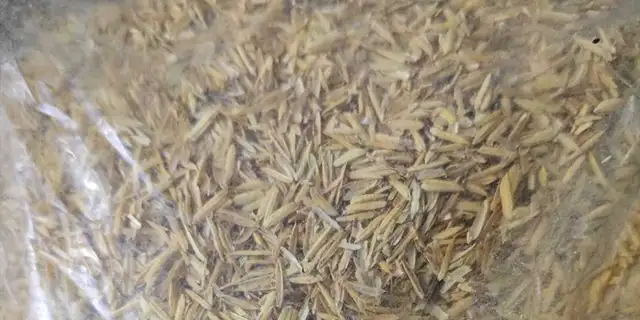
Test Report of Experimental Process
| Material Weight | 180 g |
| Pyrolysis Time | 3 hours 0 minutes |
| Maximum Pyrolysis Temperature | 650°C |
| Biochar Yield | 43.33% |
| Wood Vinegar & Tar Yield | 34.44% |
| Syngas Yield | 22.22% |
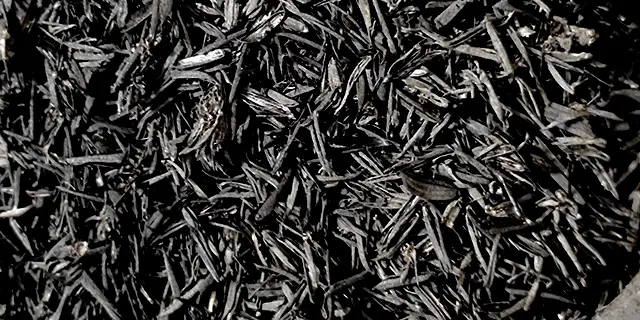
Test Report of Biochar
| Fixed Carbon | 45.48% |
| Ash Content | 45.51% |
| Volatiles | 8.90% |
| Moisture | 1.12% |
| High Calorific Value | 4324 Kcal/kg |
| Low Calorific Value | 4282 Kcal/kg |
Note: View more biochar testing reports for other biomass types
Rice Husk Recycling Status: Multifaceted Challenges
As one of the world’s major agricultural crops, rice production is increasing day by day. However, the problem of recycling rice husks, a byproduct of rice processing, has also arisen. The management of this waste resource mainly faces the following challenges.

 Low Recycling Rate
Approximately 150 million tons of rice husk are generated worldwide each year. However, the recycling rate of rice husk is less than 25%. The lack of an effective recycling system and infrastructure is the main reason. As a result, rice husk is often abandoned or not fully utilized.
 Immature Technology
Currently, available rice husk processing technologies are inefficient. For example, incineration for energy or simple composting cannot fully tap the potential value of rice husk. More advanced processing technologies, such as biomass pyrolysis, have not yet been widely used.
 Economic Feasibility Issues
Large-scale recycling of rice husk often involves high third-party costs. They include collection, transportation and processing fees. These costs may be too high for rice growers and processing plants. As a result, economic feasibility reasons hinder practitioners from recycling.
Rice Husk Charcoal Making Machine: Sustainable Recycling Choice
Rice husk pyrolysis is the current mainstream agricultural waste recycling solution. It is favored by recyclers for its environmental friendliness and high efficiency. Beston Group pyrolysis solution achieves rice husk reduction and resource utilization.

 Large-scale Recycling
Rice husk charcoal machine achieves large-scale recycling through mechanization, automation and intelligent control. The machine adopts an integrated operation process of each system. Therefore, while running uninterruptedly, the various components work together to ensure production efficiency.
 Light Ecological Burden
Carbonization process adopts controlled&closed combustion. Application of this technology reduces incineration of rice husks, thereby reducing harmful substances release. In addition, charcoal production relieves the pressure on farmland or waste landfills. This effectively releases land space.
 High Return on Investment
Although the initial investment in rice husk carbonizer may be high, the carbonized rice husk charcoal has a high market value. Therefore, as the project progresses in a long-term and stable manner, the unit cost will gradually decrease. Thus, this improves the overall economic feasibility.
Versatile Applications of Rice Husk Charcoal

Fuel Alternative Solution for Industrial Plants
Rice husk charcoal made from rice husk carbonizer is widely used as an efficient fuel source in many industrial plants. It provides a sustainable heat supply for facilities such as cement plants, boiler plants, brick factories, ceramic plants, power stations, and ships.
- Renewable fuel application: Utilizing carbonized rice husk reduces reliance on conventional fossil fuels and supports cleaner industrial energy use.
- Operational & economic benefits: This fuel alternative lowers energy costs and creates new revenue opportunities for high-energy-consuming industries.

Charcoal Production for Steel Mills/Silicon Plants
The charcoal produced by rice husk charcoal making machine is free of impurities, lightweight, has low thermal conductivity, and excellent heat retention properties. When used in steel mills or silicon plants, biochar has the following advantages:
- Thermal insulation advantage: In metallurgy and casting, using carbonized rice husks to cover molten steel or iron reduces heat loss through radiation, convection, and conduction.
- Energy & quality improvement: This insulation lowers the melting temperature and energy consumption without compromising casting temperature.
- Yield enhancement: It also minimizes steel shrinkage, significantly improving the steel yield.

Soil Remediation and Improvement
The generated rice husk biochar can significantly increase soil pH, change soil texture, and increase base exchange capacity, thereby causing soil CEC to increase.
- Organic matter transformation: Rice husk biochar can adsorb soil organic molecules and promote the polymerization of small organic molecules to form SOM through surface catalytic activity.
- Long-term soil enrichment: Its extremely slow decomposition contributes to humus formation and enhances soil fertility over time.

Carbon Sequestration and Emission Reduction
During the rice growth process, the plant captures carbon dioxide through photosynthesis. After harvesting, rice processing produces residue—rice husk—which typically undergoes natural decomposition or open burning, returning carbon to the atmosphere.
- Carbon sequestration: Rice husk charcoal machine converts this agricultural waste into stable biochar.
- Long-term carbon storage: Once sealed underground, the biochar remains isolated from the atmosphere for centuries or even millennia.
Rice Husk Charcoal Making Machine Contributes to Sustainable Agriculture
Improve Farmland Soil Environment
Neutralize Agricultural Emissions
Integrate Agricultural Supply Chain
Increase Agricultural Economic Income


In the existing agricultural system, planting and processing occur separately. The waste generated by crops after processing can’t flow back to the planting stage. The introduction of rice hull carbonizer converts rice processing waste into carbon-rich resources, which plays a significant role in agricultural planting. Thus, the machine creates a closed loop of planting and processing resources. Thus, it promotes the development of agricultural circular economy.

FAQ of Rice Husk Charcoal Making Machine
01Do I need to dry or crush the rice husks before feeding them into the machine?
02Can this machine process raw materials other than rice husks?
Yes, our equipment processes a wide range of biomass:
- Wood Waste: Wood chips, sawdust
- Food Processing Waste: Coconut shells, palm shells, sugarcane bagasse, EFB
- Crop Waste: Straws, etc.
03What is the biochar yield rate from rice husks?
04Is the machine continuous or batch-type? Can it run 24/7?
Choose Beston Group as Partner in Rice Husk Recycling Project
“The technology of rice husk charcoal making machine is the best and most trusted among all the carbonization processes that I know in the market.” One of our customers said this. Besides technology, Our various patents and certificates, high-quality products, customized solutions, and full-service support have won global trust. Join us! We will help you build benchmark project in your country. For more information about the carbonization project, you can visit our LinkedIn.